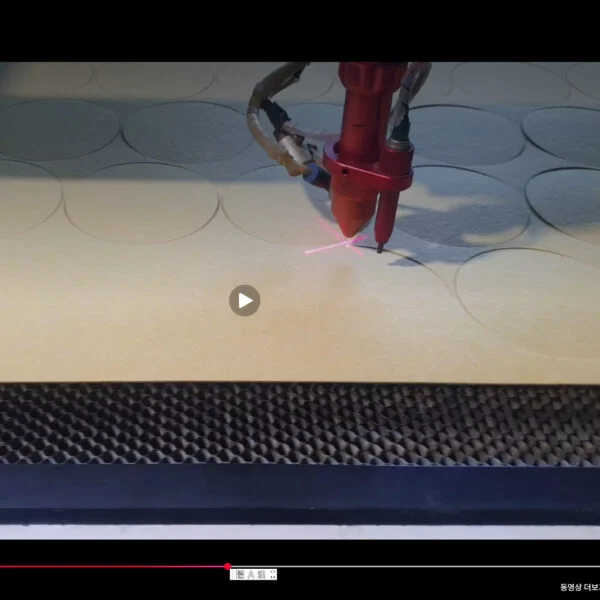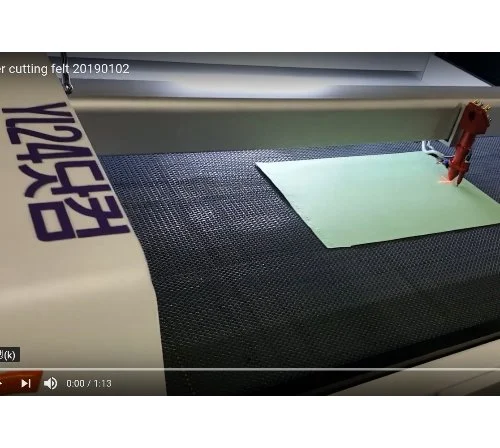


Types and Features of Felt Used as Reptile Enclosure Flooring
A practical guide to using felt flooring in lizard, gecko, snake, and turtle enclosures, including enclosure types and sizes, cutting specifications, and thickness selection criteria.
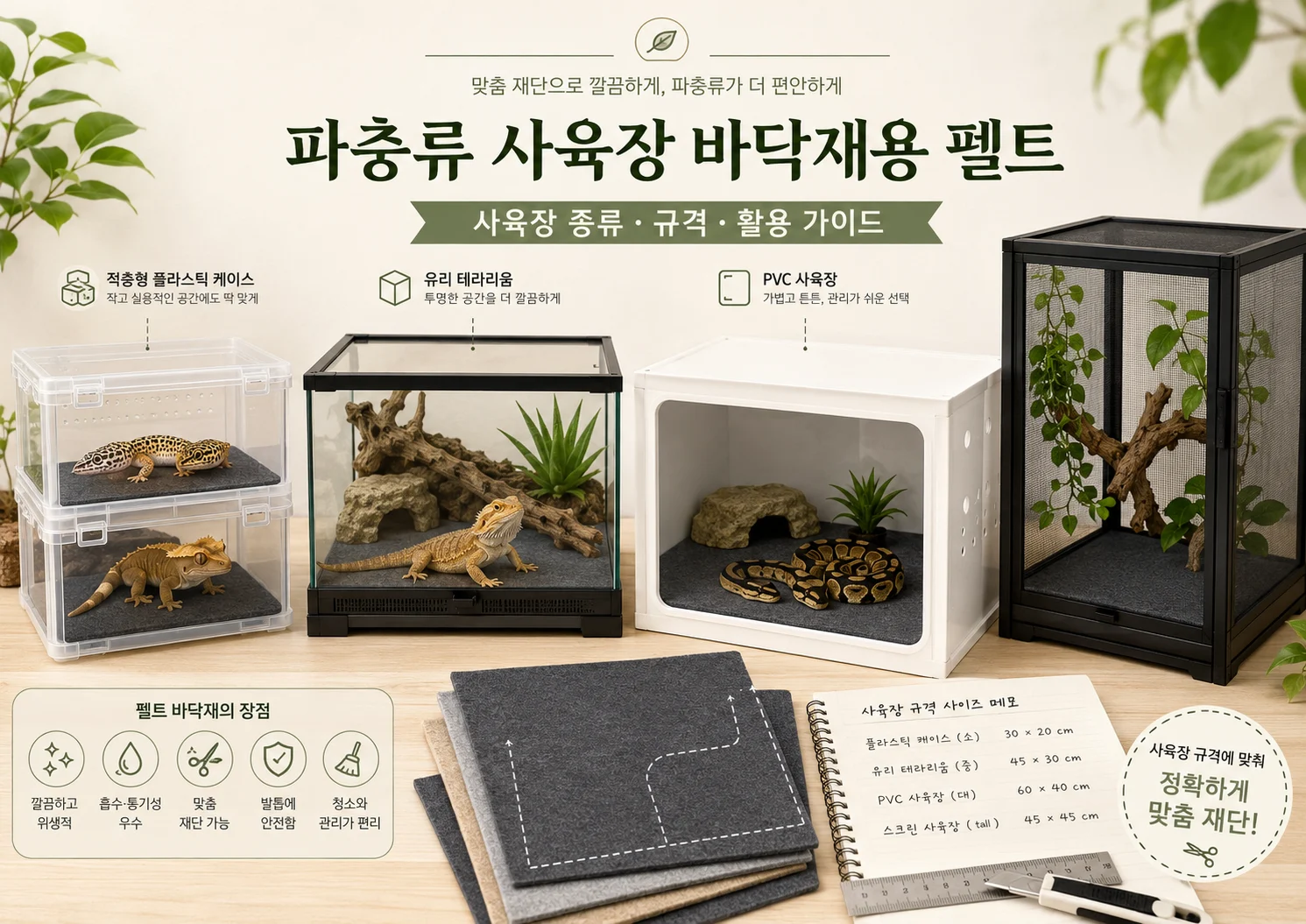
Key Takeaways at a Glance
1. Why Felt Works Well as Reptile Enclosure Flooring
Choosing reptile enclosure flooring is not just about selecting a material that looks good. It is important to consider whether the animal can move without slipping, whether there is a risk of swallowing flooring material while feeding, how easy it is to check droppings and clean the enclosure, and whether the flooring lays securely according to the enclosure size.
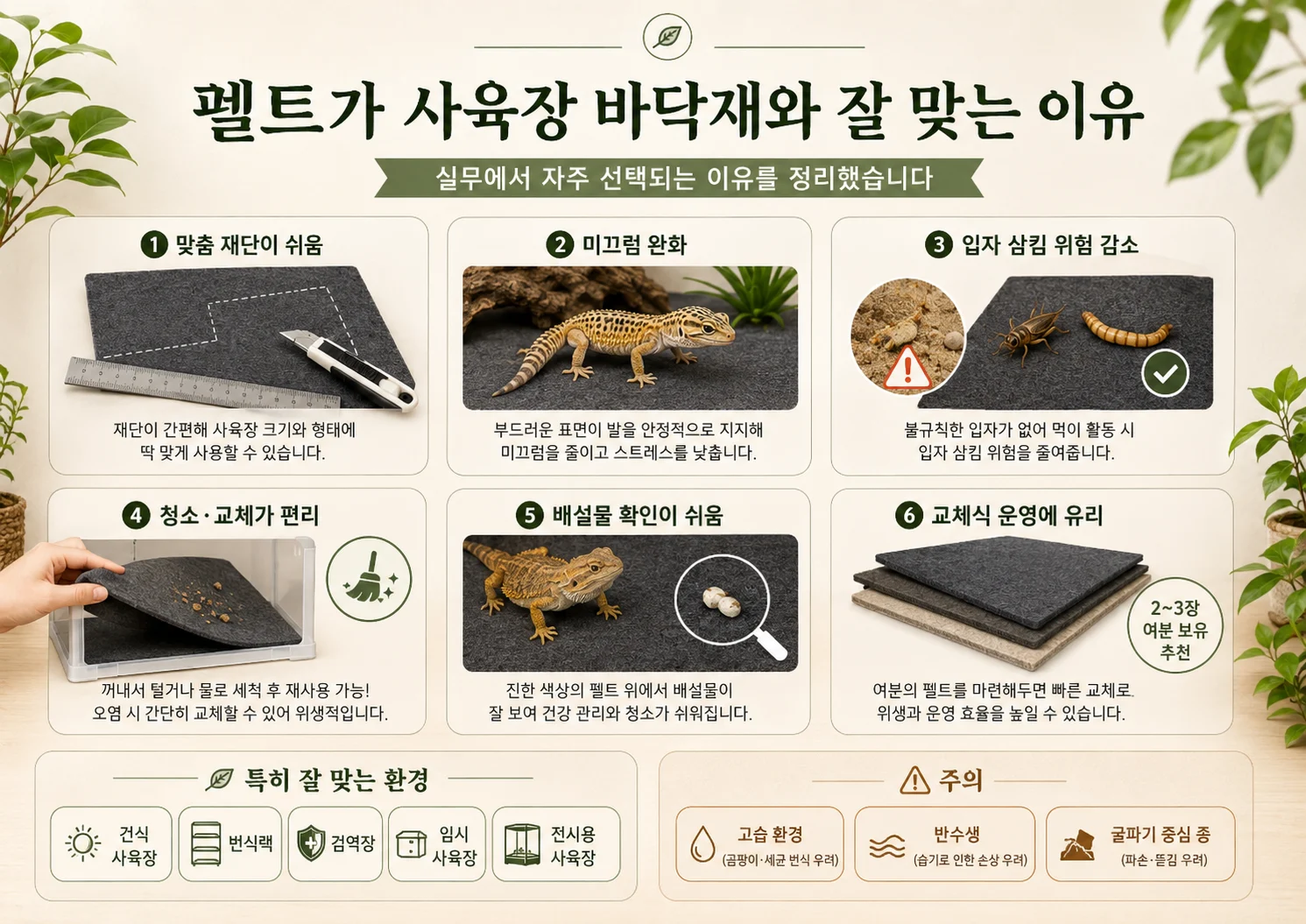
Easy to Cut to Custom Sizes
Felt is easy to cut into rectangles, rounded corners, or divided sections according to the inner floor dimensions of an enclosure. For enclosures with rounded corners, such as stackable cases, it can be cut with R10 or R15 corner radii.
Helps Reduce Slipping
Glass, acrylic, and PVC floors can be slippery because their surfaces are smooth. Felt provides moderate friction, helping the animal gain footing and improving traction on the floor.
Helps Reduce the Risk of Particle Ingestion
Unlike sand, bark, or wood chips, felt has fewer loose particles that can mix with food, making it easier to manage in quarantine setups, for young animals, or for animals with strong feeding responses.
Easy to Clean and Replace
Soiled areas can be checked quickly, and the felt can be removed and replaced as needed. Rather than using one sheet for a long time, it is better to prepare 2–3 sheets and rotate them.
Easy to Check Droppings
In quarantine or temporary enclosures, checking the condition of droppings is important. Felt makes it relatively easy to check the location and condition of droppings, which helps with health monitoring.
Neat for Display Enclosures
In shops, exhibitions, and reptile cafés, the inside of the enclosure should look neat and organized. Felt is easy to match by color and size, making it suitable for clean display setups.
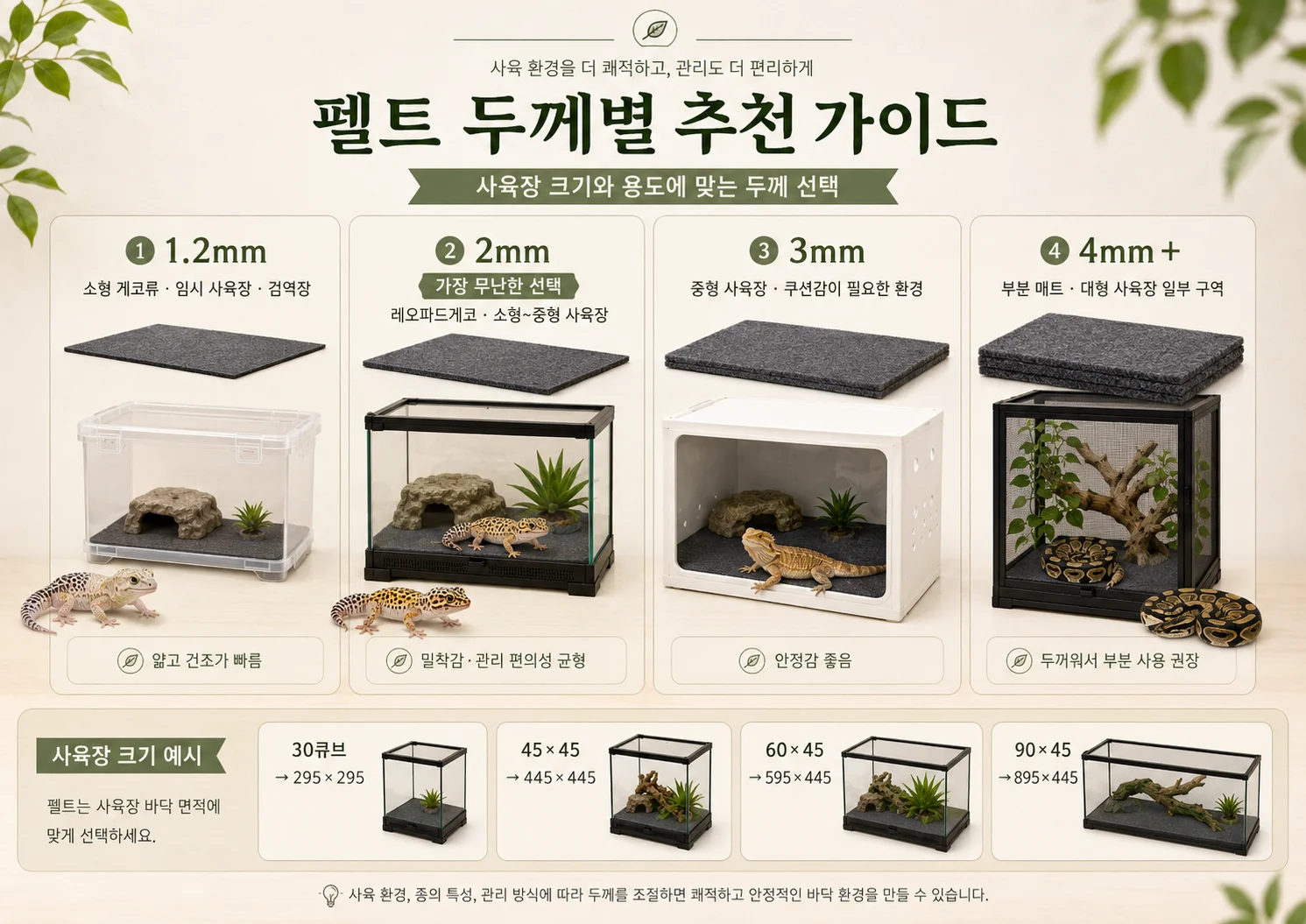
2. Features and Recommended Uses by Felt Thickness
| Felt Thickness | Recommended Uses | Features | YJ24 Recommended Series |
|---|---|---|---|
| Around 1.2mm | Small geckos, leopard geckos, temporary enclosures, and quarantine setups | Thin, lays flat on the floor, and dries quickly after washing. Good for small cases. | Solitone 1.2mm series |
| 2mm | General lizard enclosures, small to medium geckos, leopard geckos, and small skinks | The most versatile thickness. It offers a good balance of cushioning, floor contact, and ease of maintenance. | Royal20 and Artifel M20 series |
| 3mm | Medium-sized ground-dwelling lizards, enclosures that need extra cushioning, and display enclosures | Thicker and more stable. However, drying may take longer in humid environments. | MW30 series |
| 4mm or thicker | Partial mats, selected areas in large enclosures, and impact cushioning | It may be too thick for full-floor coverage, so partial use is safer. | Artifel M40 series |
3. How to Use Felt by Enclosure Type
Stackable Plastic Case
Often used for geckos, baby animals, breeding racks, and temporary enclosures. It is convenient to cut several sheets in the same size and rotate them.
Glass Terrarium
It is clean and easy to observe, but the floor can be slippery. Felt improves floor traction and gives the enclosure a neat look.
PVC / Foamex Enclosure
Often used for medium to large enclosures because of its insulation and ease of maintenance. Felt works well with this type for floor protection and replaceable maintenance.
Screen Cage
It offers good ventilation, but misting and drainage management are important. Rather than covering the entire floor, it is safer to measure the inner tray and use felt as a partial mat.
Quarantine / Temporary Enclosure
Since droppings and condition need to be checked easily, a simple and easy-to-replace flooring material is best. Felt is highly useful as a quarantine mat.
Display Enclosure
In stores or event spaces, a clean appearance is important. Felt matched by color and size works well for display enclosures.
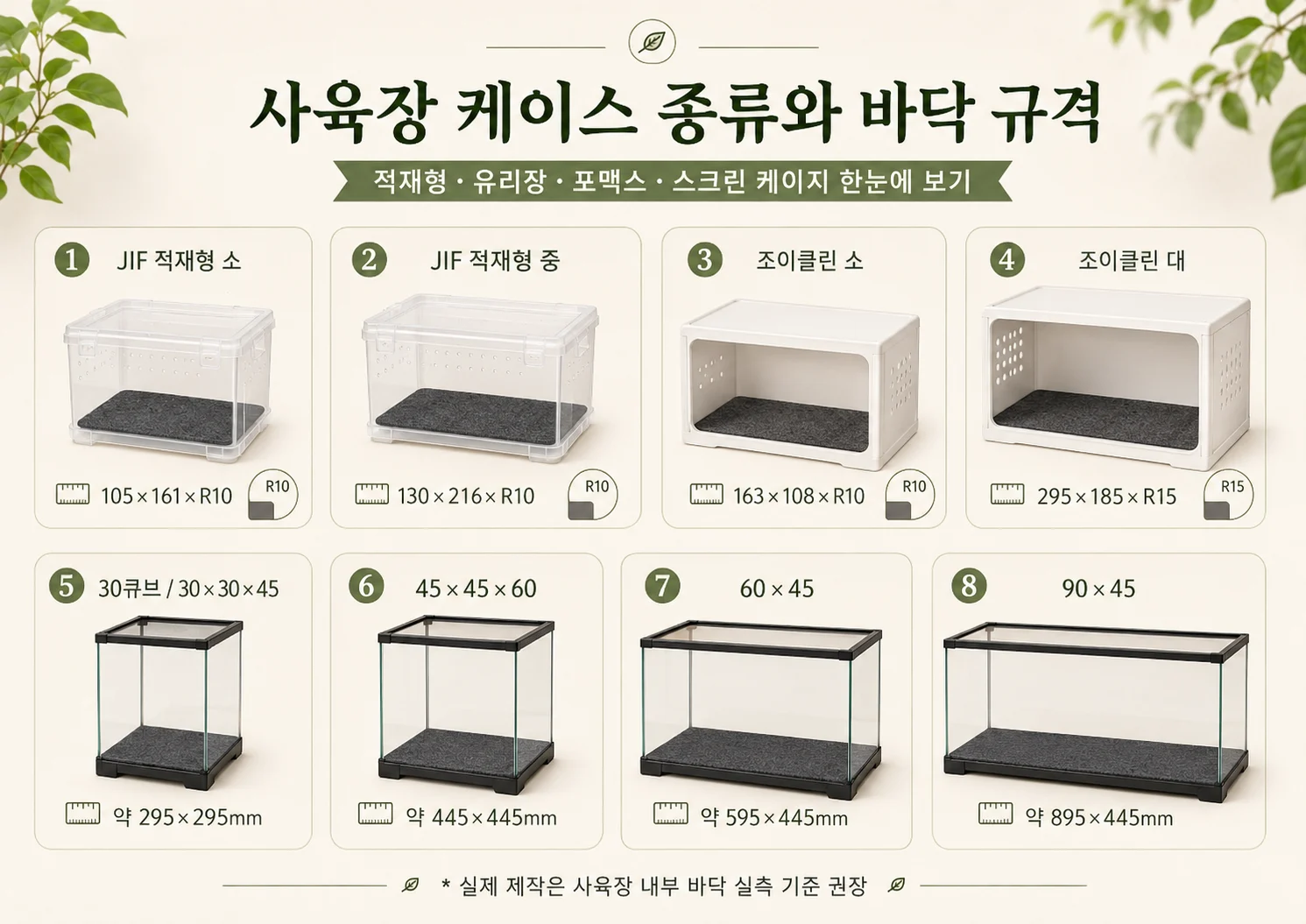
4. Reference Cutting Sizes by Enclosure Case Name
The sizes below are a quick reference guide for customer consultation and cutting requests. Actual production should be based on the measured inner floor size, not the outside dimensions of the enclosure.
Stackable Plastic Enclosure Cases
| Brand / Name | Listed Size | Example Flooring Order Size | Recommended Felt | Consultation Notes |
|---|---|---|---|---|
| JIF Stackable Small | Bottom 10.5×16cm | 105×161×R10 |
1.2mm / 2mm | Often used for baby and small geckos. |
| JIF Stackable Small Long | Bottom 10.5×15.5cm | 105×156×R10 |
1.2mm / 2mm | A taller type than the small case. |
| JIF Stackable Medium | Bottom 13×21.5cm | 130×216×R10 |
2mm | A commonly requested size for small to medium geckos. |
| JIF Stackable Large | Bottom 18.5×29.5cm | 185×296×R15 |
2mm / 3mm | Because the floor area is wider, R15 rounded corners are recommended. |
| Joy Clean Cage Small | Bottom 16.3×10.8cm | 163×108×R10 |
1.2mm / 2mm | Please confirm the width and length orientation. |
| Joy Clean Cage Medium | Bottom 23×11.5cm | 230×115×R10 |
2mm | Useful as a reference for Joy Clean Medium custom pads. |
| Joy Clean Cage Large | Bottom 29.5×18.5cm | 295×185×R15 |
2mm / 3mm | It may look similar to the JIF Large, but the width and length notation can differ. |
| Repaz Stackable Gecko Cage Small | Bottom 16×10.5cm | 160×105×R10 |
1.2mm / 2mm | Useful as a reference when customers ask for “Repaz Small.” |
Common Sizes for Glass Terrariums / Vivariums
| Name / Size | Listed Size | Reference Flooring Size | Recommended Felt |
|---|---|---|---|
| 20 Cube | 20×20×20cm | Approx. 195×195mm |
1.2mm / 2mm |
| 30 Cube / 30×30×45 | 30×30×30cm / 30×30×45cm | Approx. 295×295mm |
2mm |
| 45×45×45 | 45×45×45cm | Approx. 445×445mm |
2mm / 3mm |
| 45×45×60 | 45×45×60cm | Approx. 445×445mm |
2mm / 3mm |
| 60×45 | 60×45×30~60cm | Approx. 595×445mm |
2mm / 3mm |
| 90×45 | 90×45×30~90cm | Approx. 895×445mm |
2mm / 3mm |
Reference Sizes for Foamex / Acrylic / PVC Enclosures
| Name / Size | Listed Size | Reference Flooring Size | Recommended Felt | Consultation Notes |
|---|---|---|---|---|
| Foamex 2 ft class | 60×45×40cm | Approx. 595×445mm |
2mm / 3mm | It is usually best to guide customers to order 3–5mm smaller than the outside dimensions. |
| Foamex 3 ft class | 90×45×40cm | Approx. 895×445mm |
2mm / 3mm | A common size for larger ground-style enclosures. |
| Foamex 4 ft class | 120×45×40cm | Approx. 1195×445mm |
2mm / 3mm | Two-piece cutting may be easier to manage than one large sheet. |
5. Enclosure Sizes by Common Reptile Species and Felt Compatibility
| Species | Typical Enclosure Size | Felt Compatibility | Notes |
|---|---|---|---|
| Leopard Gecko | 60×30×30cm or larger; 90×45cm class is also recommended for adults | Good | Suitable for dry setups and easy to monitor feeding. |
| Crested Gecko | 30×30×45cm or larger; 45×45×60cm class is recommended for adults | Supplemental | A vertical enclosure is used, and climbing structures and humidity control are more important than flooring. |
| Bearded Dragon | 90×45×45cm or larger; 120×60×60cm class if possible | Moderate to good | Because they are active, 2–3mm is a safe choice, and providing a separate digging area is recommended. |
| Blue-Tongued Skink | 90×45cm or larger; 120cm class if possible | Moderate | Rather than using felt alone, it is better to provide a separate digging area. |
| Ball Python | 120×60×60cm or larger recommended for adults | Moderate to good | Hides and humidity control are important, and contamination around the water bowl should be watched. |
| Corn Snake | Around 120×60×60cm | Moderate | Escape prevention, hides, and climbing structures should also be considered. |
| Chameleon | 60×60×120cm class or larger | Limited | Ventilation, drainage, and drying after misting are more important than flooring. |
| Semi-Aquatic Turtle | Aquarium plus dry land area | Very limited | Not suitable as underwater flooring; recommended only as a supplementary mat for a dry land area. |
6. Measurements to Check Before Ordering Felt Cutting
For felt flooring, it is most accurate to order based on the actual inner floor measurements rather than the enclosure name alone. Stackable cases, glass terrariums, Foamex enclosures, and screen cages can vary in internal size depending on the manufacturer and structure.
- Enclosure brand and model name
- Listed outside size
- Actual inner floor width × length
- Whether corners are rounded
- Whether door rails or frames interfere
- Location of water bowl, hides, and heat source
- One-piece cutting or divided cutting
- Reptile species and purpose of keeping
Examples of Divided Cutting for Large Enclosures
| Enclosure Floor Size | One-Piece Cut | Divided Cutting Example |
|---|---|---|
| 60×45cm | 595×445mm 1 piece |
297×445mm 2 pieces |
| 90×45cm | 895×445mm 1 piece |
447×445mm 2 pieces |
| 120×45cm | 1195×445mm 1 piece |
595×445mm 2 pieces |
| 120×60cm | 1195×595mm 1 piece |
595×595mm 2 pieces |
| 180×60cm | 1795×595mm 1 piece |
895×595mm 2 pieces or 595×595mm 3 pieces |
7. Precautions When Using Felt Flooring
Be Careful in High-Humidity Environments
With automatic misting, high-humidity terrariums, or animals that frequently tip over water bowls, felt may remain wet for long periods. In these cases, using felt as a partial mat is safer than covering the entire floor.
Be Careful with Burrowing Species
For skinks, tortoises, and some lizards, digging behavior can be important. Rather than using felt alone, it is better to provide a soil/sand area or a dig box.
Check for Claw Snagging
If the felt becomes heavily pilled or frayed after long use, claws or teeth may get caught. If surface damage is visible, replacement is recommended.
- Remove droppings as soon as they are found.
- Replace wet felt immediately.
- After washing, dry it completely before reuse.
- Rather than using one sheet for a long time, rotate 2–3 sheets.
- Do not share felt used for quarantine with other animals.
8. Frequently Asked Questions
Does the flooring size for a small stackable case vary by manufacturer?
Yes, it can vary. The JIF Stackable Small is usually 105×161×R10,
Joy Clean Small is 163×108×R10, and Repaz Small is 160×105×R10, so the recommended sizes can differ.
For accurate custom cutting, it is safest to confirm the enclosure brand or measure the inner floor directly.
What size should I order for flooring in a 30×30×45 glass enclosure?
In general, the floor is based on 30×30cm, but about 295×295mm can be recommended so it is easy to place inside.
However, the size can vary depending on glass thickness and frame structure, so measuring the inner floor is recommended.
Which felt is good for a leopard gecko enclosure?
Leopard geckos are dry-setup reptiles that spend a lot of time on the floor, so felt flooring works well for them. For small or baby animals, around 1.2mm is suitable; for typical adult enclosures, 2mm felt is the most versatile.
Can crested geckos also use felt flooring?
They can, but crested geckos need vertical enclosures and careful humidity management. Keeping felt constantly wet is not recommended. It is better to place it only on the floor area and replace it immediately when soiled.
What felt thickness is the safest all-around choice for enclosures?
The safest all-around thickness is 2mm. 2mm felt is neither too thin nor too thick, offering a balanced fit to the floor, cushioning, and ease of washing. For small baby setups, 1.2mm can be used; for medium enclosures or extra cushioning, 3mm is also an option.
Felt Flooring Works Best as a “Managed Flooring Material”
Felt works well in reptile enclosures where cleaning, replacement, droppings checks, and custom cutting are important. It is especially useful in dry and semi-dry enclosures, quarantine setups, breeding racks, temporary enclosures, and display enclosures where efficient maintenance matters.
Before ordering, check the actual inner floor dimensions rather than the outside size of the enclosure. Stackable cases can vary by manufacturer, and the actual floor size of glass, Foamex, and PVC enclosures may be reduced by panel thickness and frame structure.
YJ24 Recommendation
Recommended Products for Reptile Enclosure Flooring
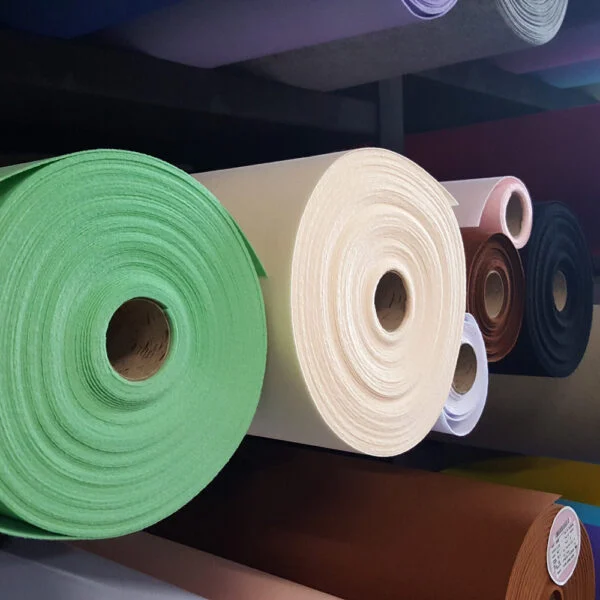
Shinwon felt paper/oil paper/hard felt/1.2mm/fabric/90x110cm/1hemp